 HRrobot.AI workforce platform


Industry programme
To connect medical and nursing workers and work with care and care sites. The focus is on the coordination of care in the wards, residential care and the need for care and care in the care classes.
View the solution pathThe need for co-ordination of care in the ward, residential care, in-patient care, in-patient care, in-patient care, in-patient care and in-patient care needs to be addressed with emphasis: the need for clarity of position, duration and personnel requirements, and the need for a timely interface between changes in the field and work records.

Pre-commencement recognition of job responsibilities, personnel qualifications, privacy protection, institutional training and handover criteria. The responsibility of the enterprise, the service team and the on-site counterpart is matched, and resources and execution are then scheduled.
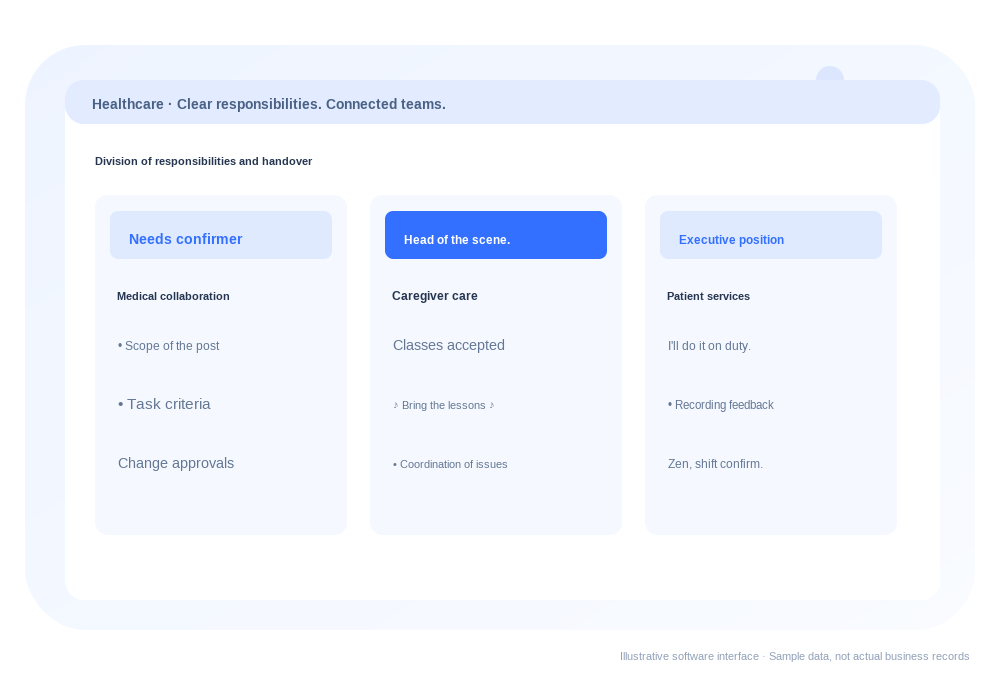
(a) Clarify the location, post, number and duration of operations, beginning with the “recognizing duties”; Synchronizes changes by the designated contact when adjustments are required.

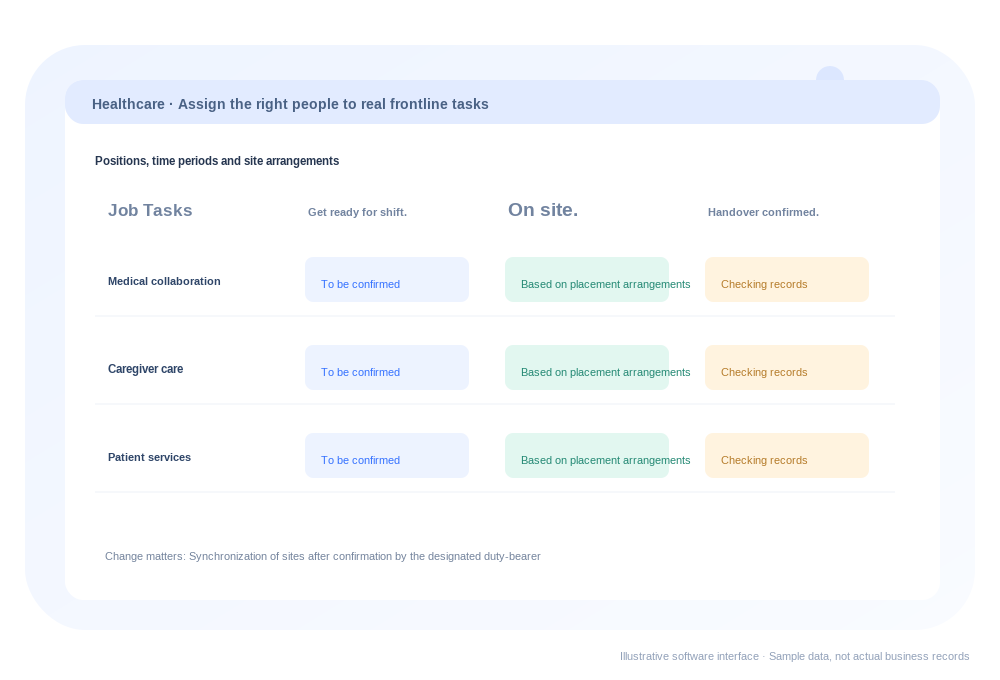
(b) Verification of the qualifications of health-care and care workers in accordance with the requirements of institutional posts, and identification of the tasks of the wards and the number of care classes; On-site care records, unusual feedback and handover confirmations. Synchronization of personnel, shifts, entrances and abnormalities around “Sync On-Site Arrangements and Changes” and “Recognizing Actual Work and Costs”.
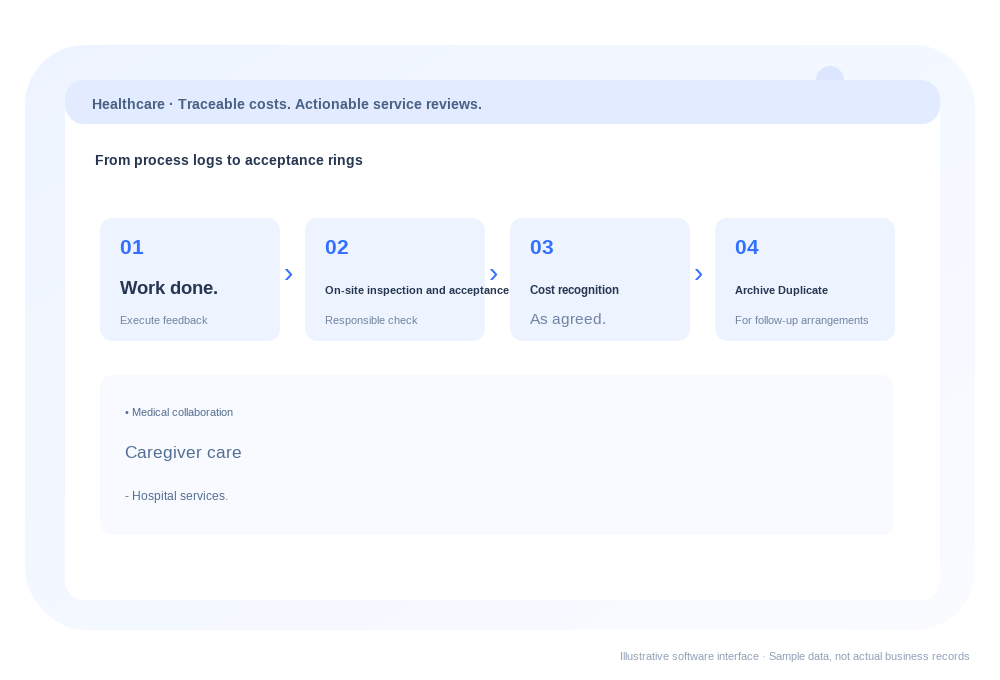
Summary of requirements arrangements, personnel shifts, work records, unusual handling and cost recognition into the service records, reconciliation of discrepancies and confirmation of implementation results as a basis for subsequent arrangements and continuous improvements.
Needs, resources, personnel and on-site responsibilities corresponded to reduced reliance on piecemeal notification and oral handover. Positions and classes are organized around the operational tempo of the medical profession.

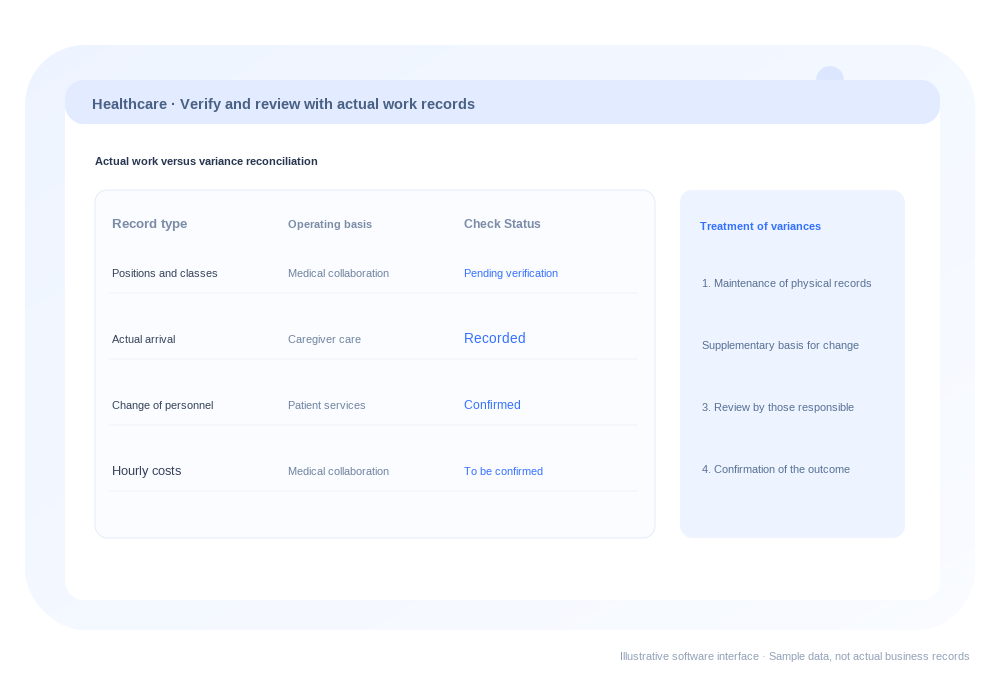
(a) The results of the reconciliation between the confirmed range of services, actual work and the costing rules; Retention of the basis for the treatment of variances in terms of absences, shifts, hours of work and costs.
From the specific job and operational scenes, see how the programme is moving forward.
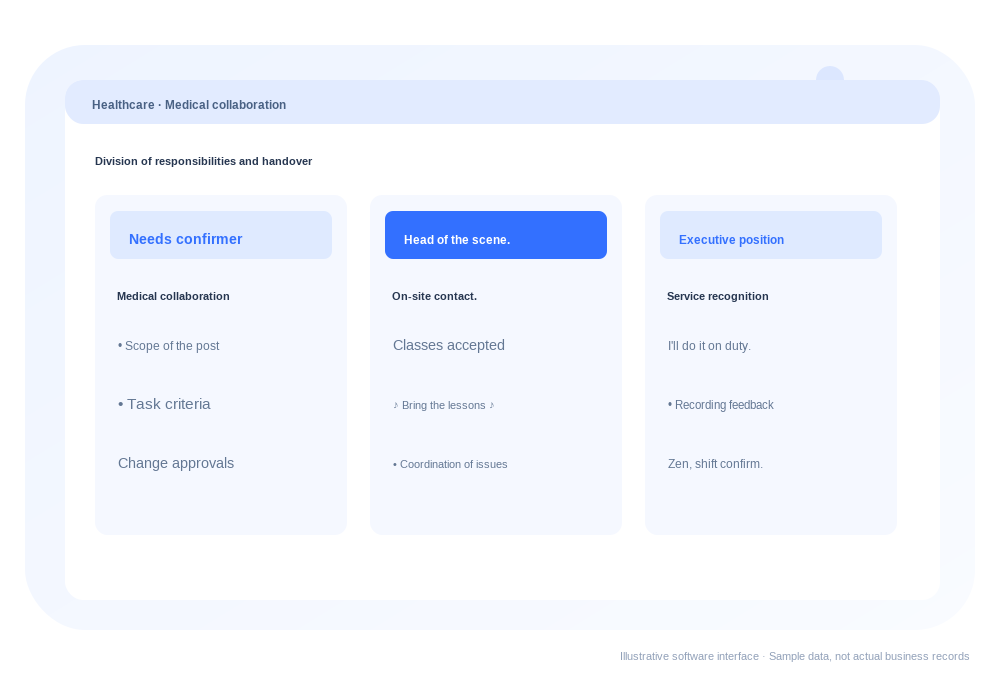
Demand: Ward care collaboration.
(b) Promotion: verification of the qualifications of health-care and care workers in accordance with the institutional requirements, and identification of area tasks and care classes; On-site care records, unusual feedback and handover confirmations.
View service processes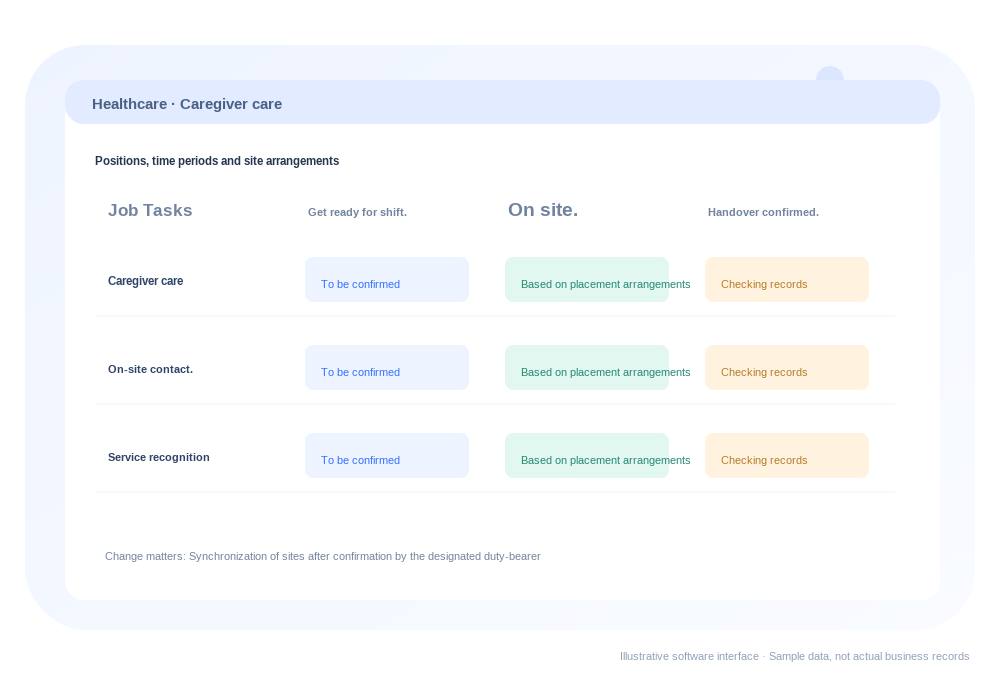
Demand: residential care.
(b) Promotion: verification of the qualifications of health-care and care workers in accordance with the institutional requirements, and identification of area tasks and care classes; On-site care records, unusual feedback and handover confirmations.
View service processes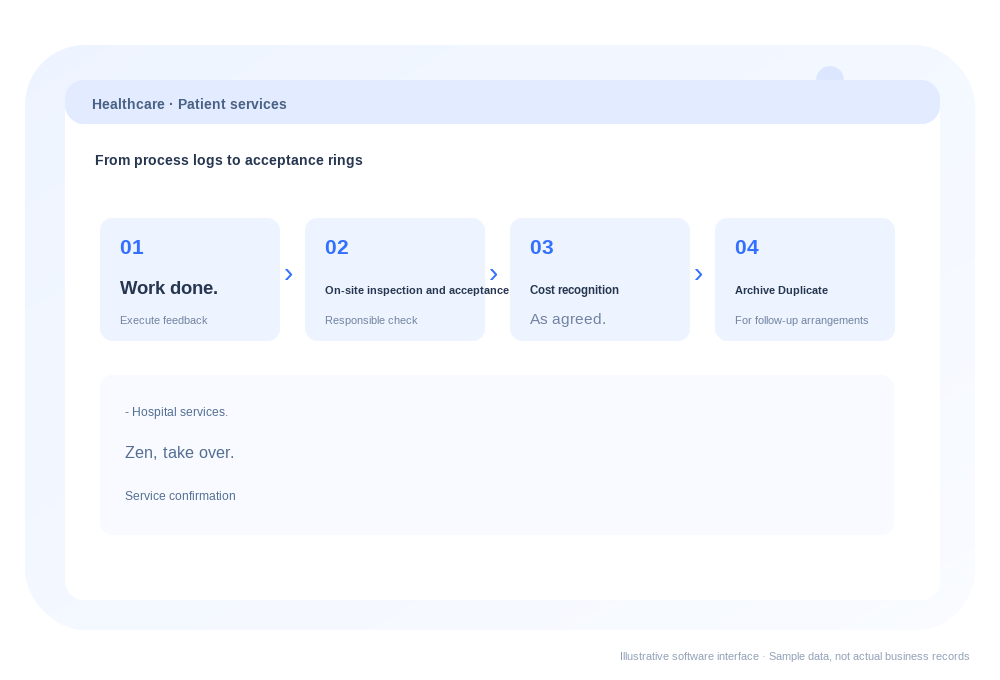
Needs: Care classes are linked to care needs.
(b) Promotion: verification of the qualifications of health-care and care workers in accordance with the institutional requirements, and identification of area tasks and care classes; On-site care records, unusual feedback and handover confirmations.
View service processesIdentify the location, post, time period and service requirements, and identify suitable means of implementation.
Communication programmeSee more customer practice 400-612-8188